The source
A proposed lake source on Salt Spring Island. Any withdrawal would depend on demonstrated rights, watershed safeguards and a viable supply plan.
Discover the source →The idea is simple: purify locally sourced lake water, present it in a bottle people want to keep, and make refilling the natural next step.
Explore the concept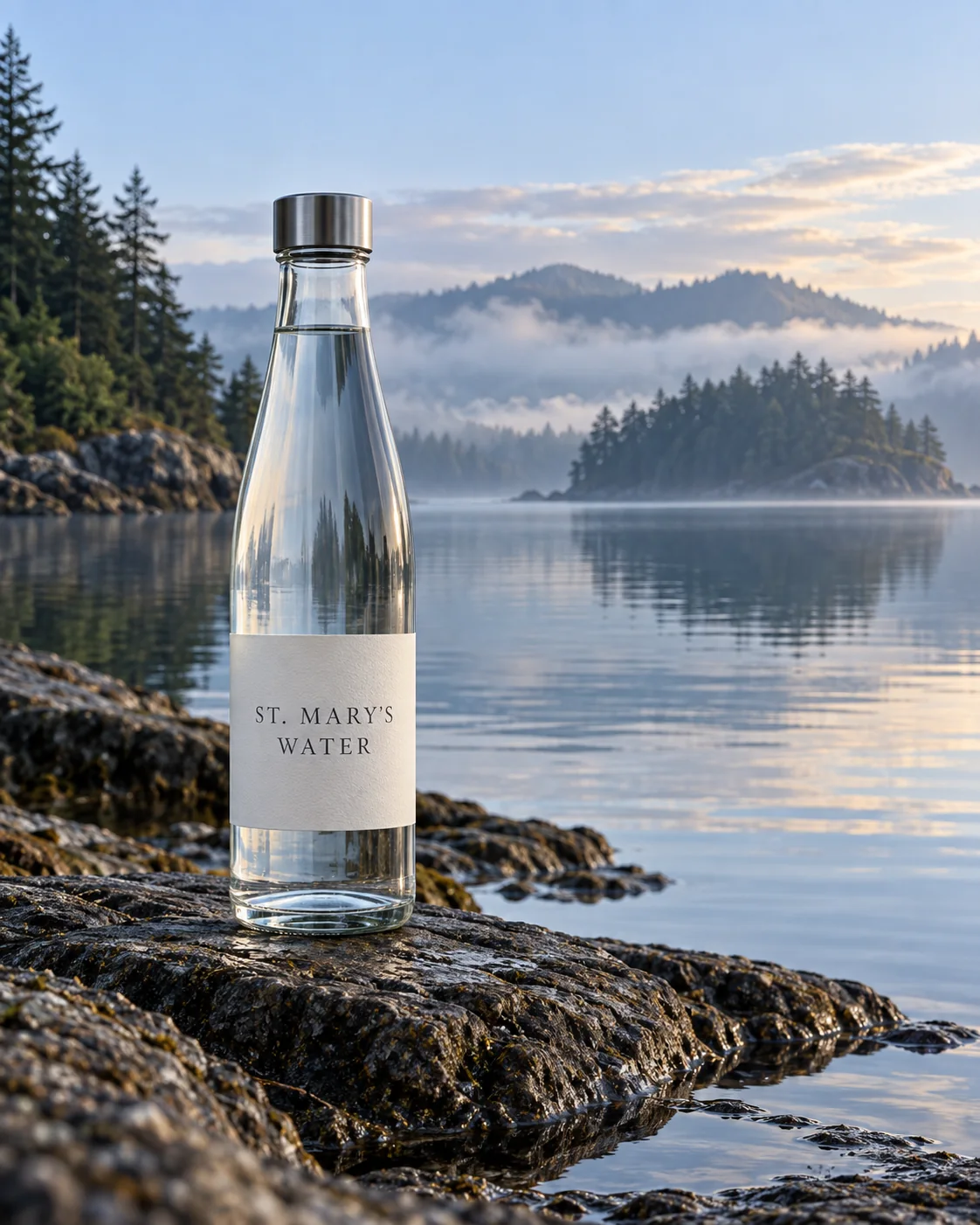
St. Mary's Water is being imagined as an island rooted beverage and refill service. It begins with careful source evaluation and a purification plan. It succeeds only if the bottle has a useful life after the first fill, local partners find refilling practical, and the source remains protected.
See what must be verified →A proposed lake source on Salt Spring Island. Any withdrawal would depend on demonstrated rights, watershed safeguards and a viable supply plan.
Discover the source →A durable glass bottle with a quiet identity, designed for a table, a guest room or the daily trip across the island.
Explore the bottle →A local refill and collection system that needs operating partners, cleaning controls and measured results before it can launch.
Plan a refill →Refill points, hospitality bottles and local delivery routes should be built around real island use, not a distant supply chain. The proposal is intentionally small enough to measure honestly and adjust.
For island partners“The bottle should remind you where the water came from, and give you a reason to use it again.”Brand principle
Water is a food product. This concept is being developed around evidence, proper treatment, and a transparent route to market.
Confirm the proposed lake source, authorized access, water rights, sustainable volumes and effects on existing users.
Design treatment around actual source water, validate sanitation and testing, and comply with applicable requirements.
Pilot bottle durability, cleaning, refill economics, local demand and logistics before making broad environmental claims.